Travel and telescopic fishing rods: a buyer's guide
Telescopic or multi-piece travel rod? How the two designs differ, what they are good and bad at, and how to choose between the Daiwa Megaforce Telescopic, Daiwa Powermesh Game Travel II and a ready-made telescopic combo.

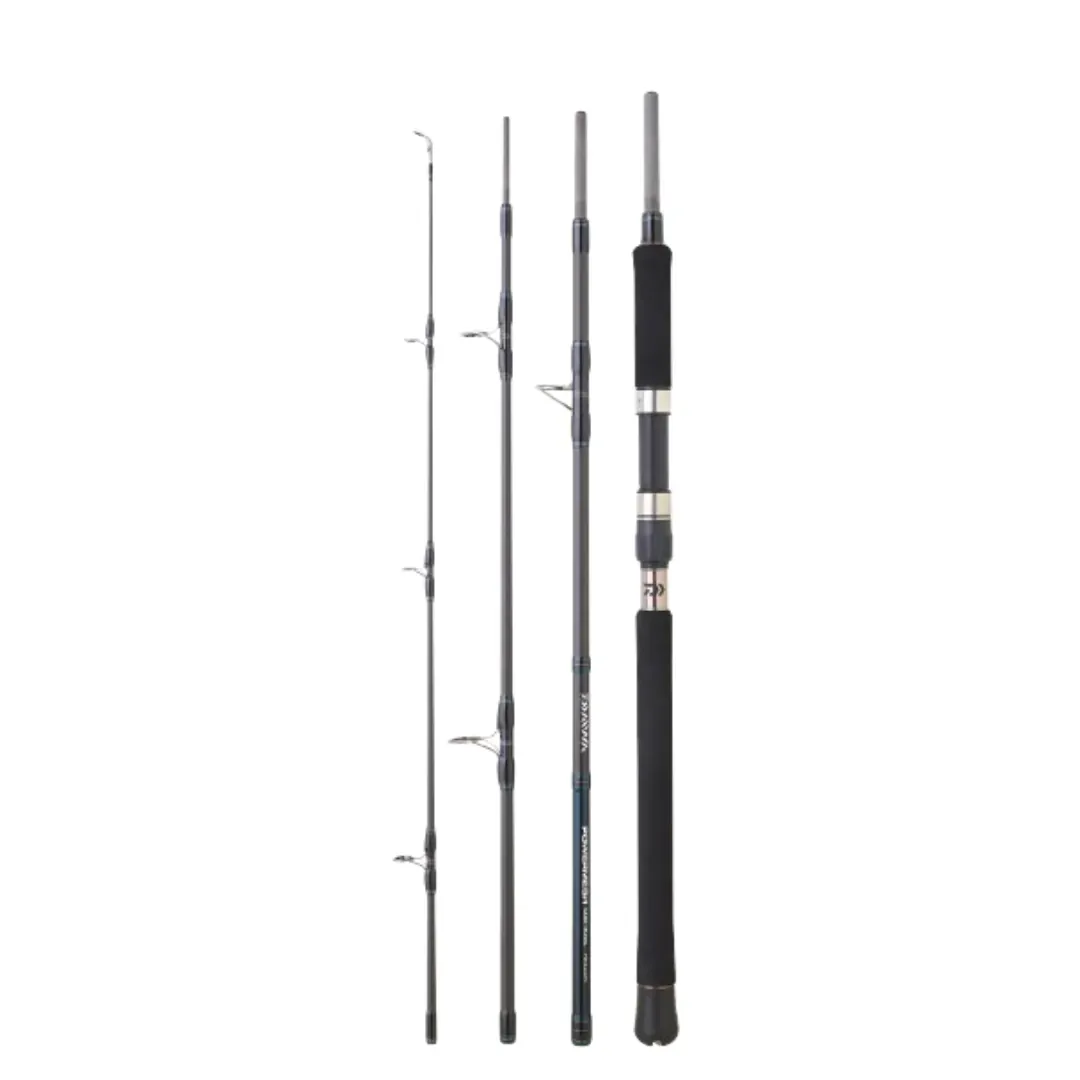
A telescopic rod slides into itself and packs down to under a metre, so it is the easiest rod to carry and the quickest to set up. A multi-piece travel rod, such as a 4-section, joins with spigots instead. It bends more like a one-piece rod, so it is better for lure casting and fighting bigger fish.
Quick answer
- Choose telescopic if you want a rod that lives in a car boot, a bike bag or a backpack, and you fish mainly with bait from beaches, rocks, jetties or riverbanks.
- Choose a multi-piece travel rod if you cast lures, fight strong fish, or fly to fishing trips and want a rod that feels like a full-length one.
- Choose a telescopic combo if you are starting out and want a rod, reel and line that already match.
- On our shelf: the Daiwa Megaforce Telescopic (telescopic, 3.0–4.5 m), the Daiwa Powermesh Game Travel II (4-piece, 8–10 ft) and the White Rabbit Combo (3.5 m telescopic rod with a 6000 size reel).
Customers often come to our Udupi counter wanting "one rod that fits in the car". Both of the designs below can do that, but they suit different kinds of fishing. Here is how to choose.
How is a telescopic rod different from a travel rod?
A telescopic rod is made of hollow sections that nest inside each other. To fish, you pull each section out and twist it gently to seat it. Closed, the whole rod is about as long as its thickest section.
A multi-piece travel rod comes apart into several sections, usually three to five, that slot together at joints called spigots or ferrules. You assemble it like a normal two-piece rod, only with more joints. Packed, it is the length of one section plus a little.
| Telescopic rod | Multi-piece travel rod | |
|---|---|---|
| Packed length | Very short. Usually under 1 m | Short. Depends on rod length and number of pieces |
| Set-up time | Seconds | A minute or two |
| Action and feel | Softer, with more flex near the joints | Close to a one-piece rod |
| Best for | Bait fishing, bottom fishing, casual and family fishing | Lure casting, jigging, stronger fish, air travel |
| Guides | Fixed to each section. Line them up on extension | Fixed. Line up the guides when you assemble |
| Weak points | Sand and grit in the sections. Joints stuck after saltwater use | Joints can loosen during long casting sessions |
| Typical price | Lower | Higher |
When does a telescopic rod make sense?
Telescopic rods are good for the kind of fishing many people actually do. You see the water, park the bike, and want to be fishing five minutes later. They suit:
- Bait fishing from beaches, breakwaters, jetties and estuary banks.
- Long-range bottom fishing, where a longer rod helps you cast a sinker and bait clear of the shore break.
- Fishing on the go, where the rod lives in a car boot or on a scooter.
Their limits are equally clear. The joints make the action softer and less precise, which matters when you work lures all day. Sand also works into the sections easily. Collapsing a gritty telescopic rod can scratch the blank, so rinse it before you close it.
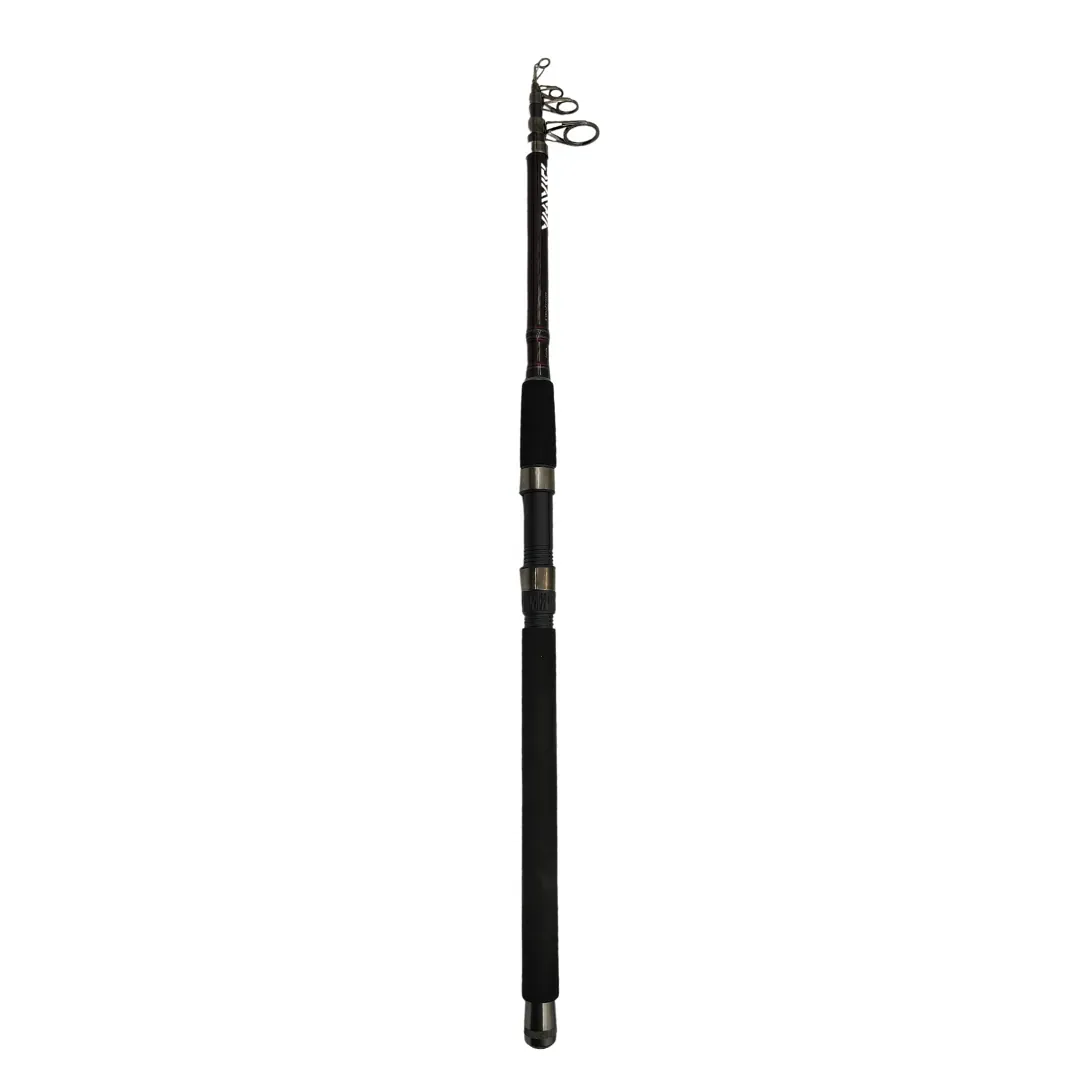 Daiwa Megaforce Telescopic Rod₹3,749View Product →
The Daiwa Megaforce Telescopic Rod is the telescopic rod we point people to for heavier bait fishing. Every length in our range is rated for 100–200 g casting weight, so it can throw a proper surf sinker and bait:
| Model | Length | Sections | Closed length | Casting weight |
|---|---|---|---|---|
| MF30T-AA | 3.00 m | 5 | 86 cm | 100–200 g |
| MF35T-AA | 3.50 m | 6 | 82 cm | 100–200 g |
| MF40T-AA | 4.00 m | 6 | 98 cm | 100–200 g |
| MF45T-AA | 4.50 m | 7 | 99 cm | 100–200 g |
It has a carbon-fibre blank and titanium oxide guides. Every size closes to under a metre, so even the 4.5 m fits across most car boots.
When is a multi-piece travel rod worth the extra money?
Choose a travel rod when the rod has to perform rather than just fit in a bag. This includes:
- Lure fishing, such as casting metal jigs or poppers for seer fish (kingfish), barracuda or giant trevally, where you cast hundreds of times a day and need a crisp action.
- Strong fish that test a rod's backbone. Spigot joints keep the bend smoother than telescopic sections do.
- Flying to a trip. A 4-piece rod in a hard case is far safer in checked baggage than a loose rod.
 Daiwa Powermesh Game Travel II₹7,173View Product →
If you searched for a "Daiwa Game" travel rod, the Daiwa Powermesh Game Travel II is the one we carry. It is a 4-section spinning rod in 8 ft, 9 ft and 10 ft lengths, built on a high-modulus carbon blank with spigot joints. It has a Fuji reel seat, Fuji guides, a heel gimbal for fighting fish from the hip, and a rapid progressive action. It comes in a carrying case.
| Length | Sections | Daiwa code |
|---|---|---|
| 8 ft | 4 | PMG244H-BF |
| 9 ft | 4 | PMG274H-BF |
| 10 ft | 4 | PMG304H-BF |
Is a telescopic combo a good place to start?
For a first rod, yes. A combo removes the guesswork of matching reel size and line to the rod, which is where most beginners go wrong.
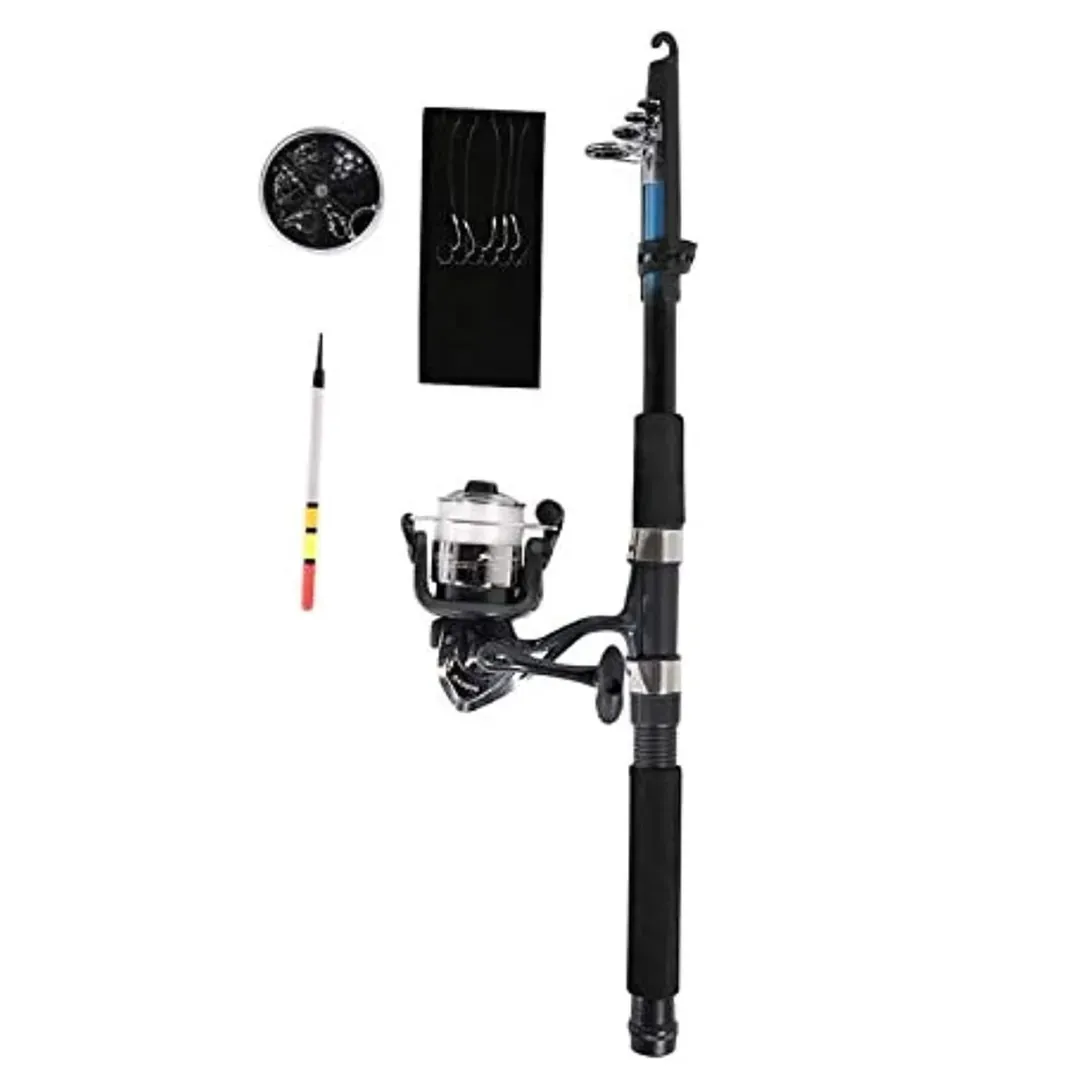 White Rabbit Combo₹3,541View Product →
The White Rabbit Combo pairs a 3.50 m telescopic rod with a 6000 size spinning reel. The reel has a 5.5:1 gear ratio and a 5 kg maximum drag, and holds 220 m of 0.40 mm mono. That is a sensible all-round set-up for bait fishing from the shore. When you want to cast lures more seriously, upgrade the rod first.
What length and casting weight should you pick?
Length: longer rods cast further and keep the line above breaking waves, but they are slower to handle and harder to use in tight spots. As a rough guide:
- 2.4–2.7 m (8–9 ft): lure fishing from rocks and boats, estuaries.
- 3.0–3.6 m: general shore fishing with bait, breakwaters.
- 4.0–4.5 m: beaches with surf, where distance matters.
Casting weight: this is the range of lure or sinker weight the rod is built to throw. Fish near the middle of the range. Casting the maximum weight on every cast shortens a rod's life, and lures far below the minimum will not load the blank properly.
Reel match: a 3000–4000 size spinning reel suits most 8–9 ft lure rods. Heavier telescopic surf rods balance better with a 5000–6000 size reel. Our guide to spinning reel sizes covers this in more detail.
How do you look after a telescopic or travel rod on the coast?
Salt air and humidity are hard on joints and guides. A few habits make a big difference:
- Rinse with fresh water after every saltwater session. For telescopic rods, extend the rod and rinse each section, then dry it before you collapse it. Salt and sand trapped inside cause most stuck sections.
- Seat sections firmly and line up the guides before every cast. A loose joint that twists under load is how rods break at the joints.
- Check that spigot joints are still tight during a long day of casting. They can work loose.
- Store rods dry, not in a closed bag, during the humid monsoon months, when many anglers on the west coast take a break. Check the guide inserts for cracks and the reel seat for corrosion before the season reopens.
Browse every length and style in our fishing rods section.
FAQ
Are telescopic fishing rods any good?
Yes, for the right job. A good telescopic rod like the Daiwa Megaforce handles bait and bottom fishing well and is very easy to carry. For all-day lure casting, a multi-piece travel rod gives a better action.
Can you catch big fish on a telescopic rod?
You can, as long as you match the rod's rating to the fish, the line and the sinker weight, and seat every section firmly. For regular battles with large, powerful fish, a travel or one-piece rod with spigot joints is the stronger choice.
What size reel goes on a 3.5 m telescopic rod?
For heavier surf and bottom fishing, a 5000–6000 size spinning reel usually balances best. The White Rabbit Combo, for example, pairs its 3.5 m rod with a 6000 size reel.
Can I take a travel rod on a flight?
Usually yes, in checked baggage, but airline rules vary, so check with your airline before you fly. A 4-piece rod in a hard tube or case, like the Powermesh Game Travel II, is much more likely to arrive in one piece.
How do I free a stuck telescopic rod section?
Do not force it with pliers. Soak the joint in warm fresh water to dissolve salt, then grip both sections with rubber gloves or a jar-opener pad and twist gently while pulling. Rinsing after every trip prevents most stuck sections.
Related products
₹3,749
₹7,173
₹3,541
Related articles
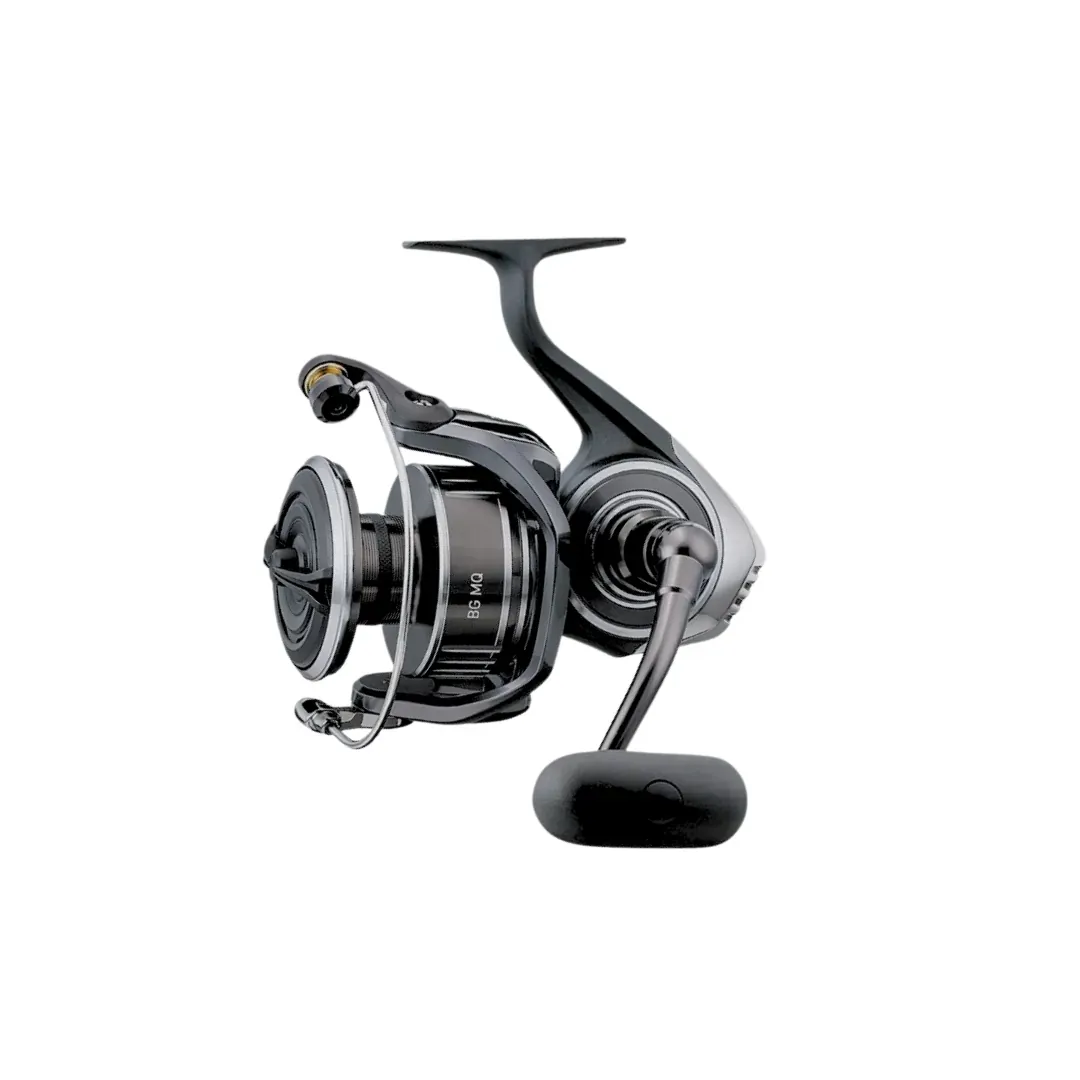
What the numbers and letters on a Daiwa spinning reel mean, which size suits which fishing in India, and how the Aird LT, Aggrest LT, Exceler LT, BG MQ and Certate SW compare, from 3000 for estuaries to 6000 and up for offshore.
Al Shahama Marine Editorial · 10 min read