Braid vs mono vs fluorocarbon: choosing fishing line in India
Braid, monofilament or fluorocarbon? A plain guide from our Udupi counter: what each line does, which suits Indian coastal and freshwater fishing, how to size it, and why most anglers end up using braid with a leader.

For most fishing in India, use braid as your main line with a mono or fluorocarbon leader. Braid has almost no stretch and casts a long way on a thin diameter. Mono is cheap and forgiving, so it suits beginners and bait fishing. Fluorocarbon is the one to use as a leader, because it is hard to see and stands up to rocks and teeth.
Quick answer
- Braid (PE): best main line for lure casting, jigging and any fishing where you need to feel the bite. Pair it with a leader.
- Monofilament / copolymer: best value, easy to knot and forgiving. Good for bait fishing, beginners and budget reels.
- Fluorocarbon: mainly a leader material. It is low-visibility, abrasion-resistant and sinks.
- Not sure? Fill a 3000–4000 size spinning reel with braid of about 20–30 lb and tie on 2–3 feet of a 30–40 lb leader.
At the counter in Udupi we get asked which line is "best" almost every day. Each type does a different job, so the useful question is which job you need done. This guide covers what each line is, where it works on Indian water, and how to put the pieces together.
What is the difference between braid, mono and fluorocarbon?
Braid (also called PE line) is woven from several strands of polyethylene fibre. More strands, such as the 8-strand "8X" lines, give a rounder and smoother line that runs more quietly through the guides. Braid has almost no stretch and is very thin for its strength.
Monofilament is a single extruded strand, usually nylon. Copolymer lines are a mono made from more than one polymer, which lets the maker adjust stretch, memory and abrasion resistance. On the shelf they sit in the same family. Mono stretches noticeably, floats or sinks slowly, and costs the least.
Fluorocarbon is also a single strand, made from a different polymer. It is denser than water, so it sinks. Its light refraction is close to water's, which makes it harder for fish to see. It is stiffer and costs more than mono, which is why most anglers use it only as a leader.
How do the three lines compare?
| Braid (PE) | Mono / copolymer | Fluorocarbon | |
|---|---|---|---|
| Stretch | Near zero | High | Low to medium |
| Diameter for a given strength | Thinnest | Thickest | Thick |
| Casting distance | Longest | Good | Fair (stiffer) |
| Bite sensitivity | Highest | Lowest | Medium |
| Visibility to fish | High (often coloured) | Medium | Low |
| Abrasion resistance | Low against rock and teeth | Good | Very good |
| Floats or sinks | Floats | Floats or sinks slowly | Sinks |
| Knots | Needs specific knots (FG, PR, Palomar) | Easy | Needs care. Wet knots well |
| Typical use | Main line | Main line, or a budget leader | Leader |
| Price | Higher | Lowest | Highest per metre |
When should you use braid?
Use braid when distance, sensitivity or a thin line matters. That covers most lure fishing: casting spoons and metal jigs to seer fish (kingfish) and barracuda, popping for giant trevally, and working soft plastics or hard lures along mangrove edges for mangrove jack.
Because braid barely stretches, a light touch from a fish reaches your hand straight away, and the hook sets the moment you strike. Its thin diameter also means more line on the spool and less drag from current and wind.
Braid has two weak points. It cuts easily on rock, oyster shell and barnacles, and fish can see it. A leader solves both problems, as covered below.
Two of the 8-strand braids we stock:
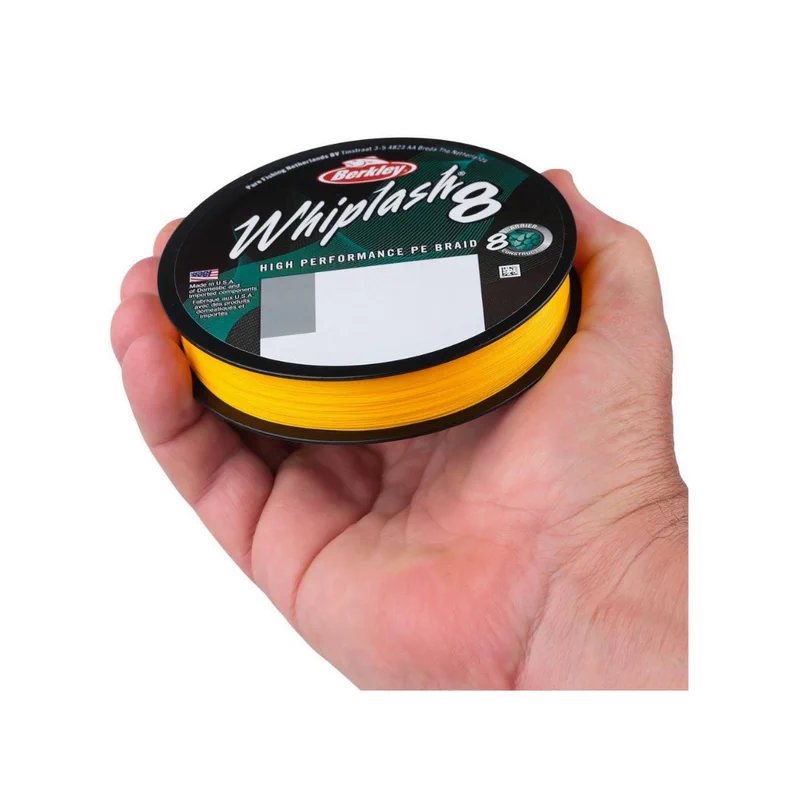
Berkley Whiplash 8X – Yellow₹1,950View Product →
Berkley Whiplash 8X is a 100% PE, 8-carrier braid sold in 150 m spools. It comes in diameters from 0.06 mm (24 lb) up to 0.28 mm (103.6 lb), and the yellow colour is easy to see when you are watching for a bite.
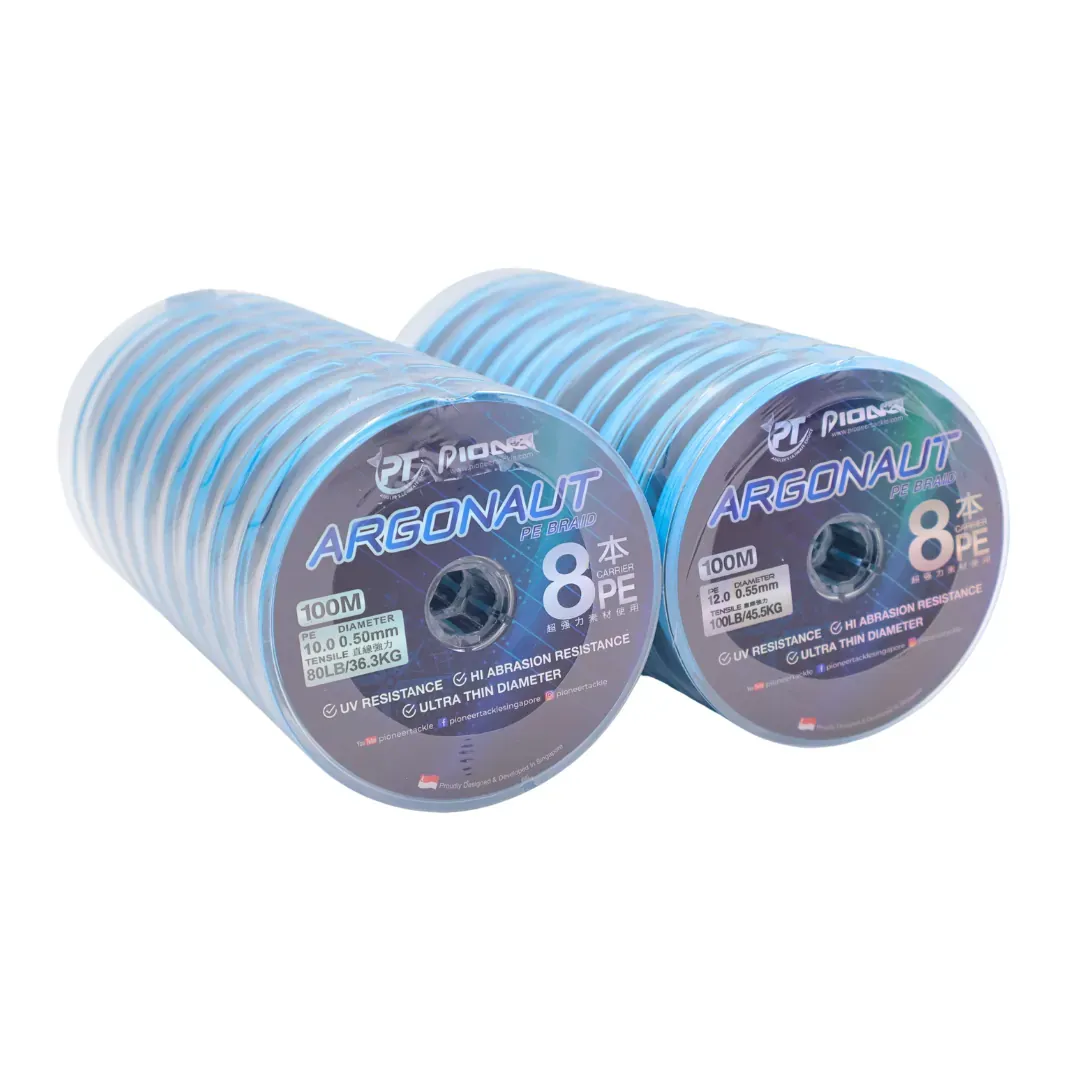 Pioneer Argonaut XG 8X₹305View Product →
Pioneer Argonaut XG 8X comes in 100 m spools from PE #1.0 (0.14 mm, 20 lb) to PE #5.0 (0.40 mm, 60 lb). It is a good-value braid if you want PE sizing rather than diameter.
When is mono the better choice?
Mono is the better choice when you want something cheap, simple and forgiving:
- Bait fishing from rocks, jetties and breakwaters, where the stretch acts as a shock absorber and stops light hooks pulling out.
- Beginners, because mono tangles less dramatically than braid and takes simple knots.
- Freshwater fishing for carp and similar fish, where long casting is less important than a forgiving line.
- Leaders on a budget. A heavier mono is a perfectly good leader for a lot of inshore fishing.
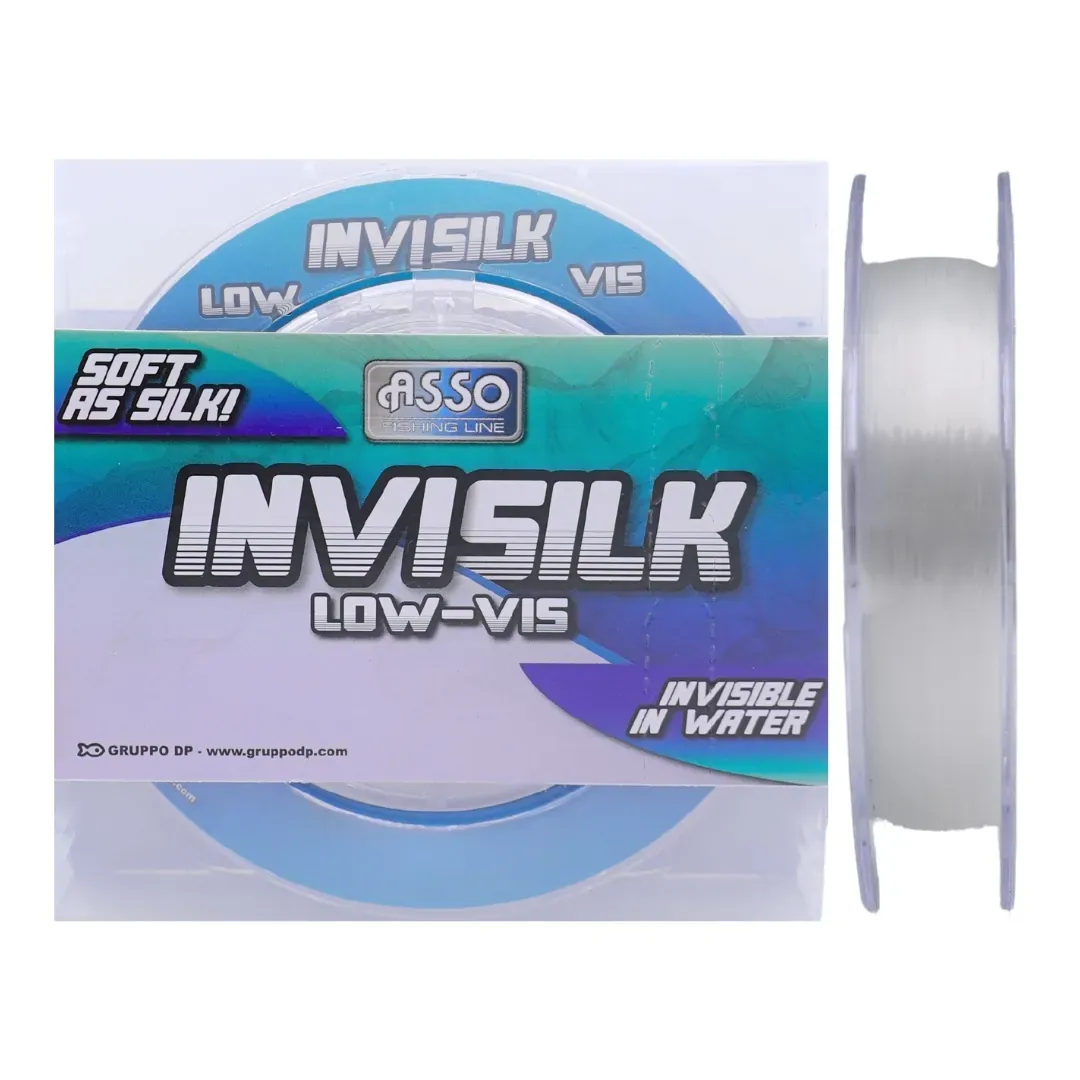 Asso Invisilk Clear₹517View Product →
Asso Invisilk Clear is a copolymer line. We currently stock it in 0.50 mm (25 kg breaking strength, 220 m spool). At that thickness it works well as a heavy shock leader or as a main line for bottom fishing around rough ground.
Do you need fluorocarbon at all?
You do not need a full spool of fluorocarbon. It is too stiff and too expensive to be a good main line on most spinning reels. Where it helps is the last metre or so. A fluorocarbon leader is less visible in clear water, it resists abrasion against rock and the raspy mouths of many fish, and because it sinks it helps lures and baits stay down.
In coloured water, such as river mouths after rain, mono leader often does the job just as well. In clear water over reef, fluorocarbon is worth paying for.
How do you match line to the reel and the fish?
A rough starting point for Indian coastal and freshwater fishing:
| Fishing | Reel size (spinning) | Braid main line | Leader |
|---|---|---|---|
| Light estuary and lake lure fishing | 2000–3000 | PE 0.8–1.2 (about 12–20 lb) | 12–20 lb |
| Shore casting for seer fish, barracuda, trevally | 4000–5000 | PE 1.5–3 (about 20–40 lb) | 30–50 lb, longer if there are teeth |
| Mangrove jack around structure | 3000–4000 | PE 1.5–2.5 (about 20–40 lb) | 30–40 lb fluorocarbon |
| Popping and jigging from a boat | 6000 and up | PE 4–6 (about 50–80 lb) | 60–100 lb |
The braid strengths in brackets are approximate, because every brand rates its PE sizes differently. Always check the breaking strength printed on the spool rather than the PE number alone. For example, Pioneer rates its Argonaut XG PE #2.0 at 30 lb.
If you are spooling braid onto a budget spinning reel, the two Pioneer reels below are popular starting points:
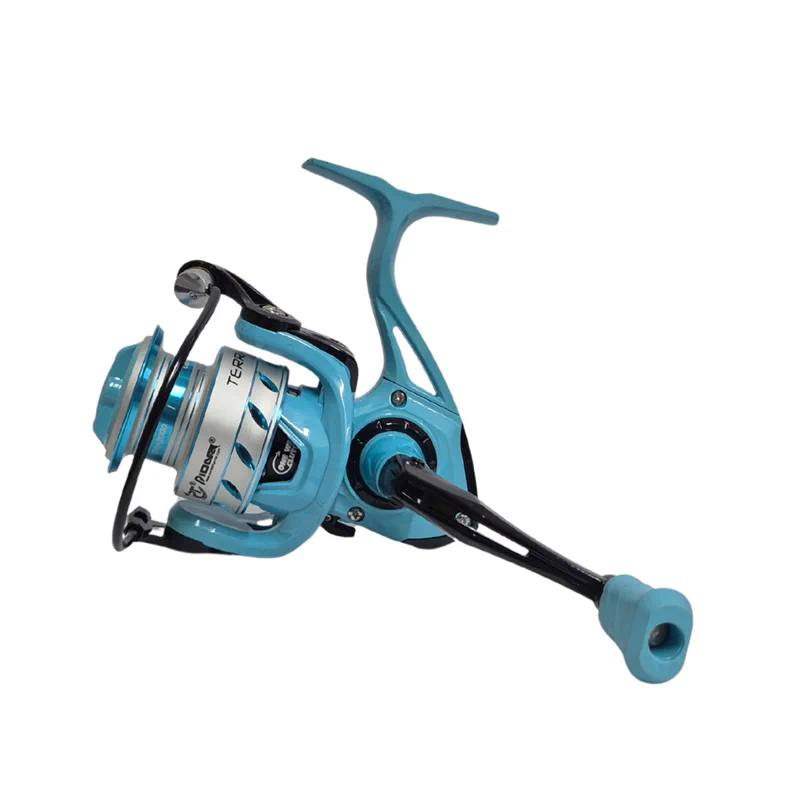 Pioneer Terra₹1,538View Product →
Pioneer Terra comes in 2000, 3000 and 4000 sizes, with a 5 kg to 6 kg maximum drag and a graphite body.
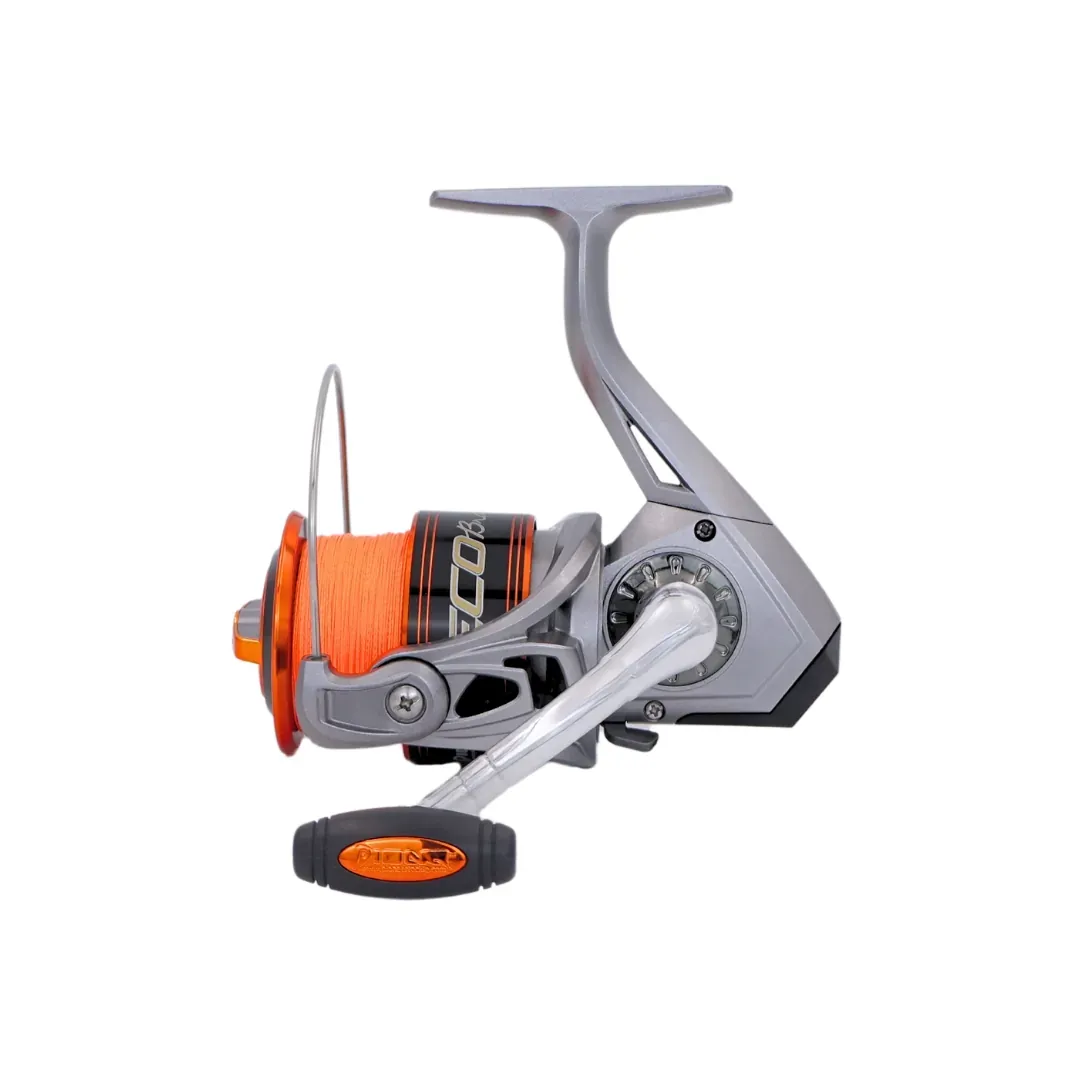 Pioneer Eco Braid XE₹1,367View Product →
Pioneer Eco Braid XE comes in 3000, 4000 and 6000 sizes, with an anodised aluminium spool and a maximum drag of 6 kg to 8 kg depending on size.
One tip for braid on any reel: braid can slip around a smooth spool when you set the drag hard. Put a few turns of mono backing or a strip of tape on the spool first, then join the braid to it.
How do you join braid to a leader?
Use a dedicated braid-to-leader knot. The FG knot is slim and strong, and it passes through the guides easily on a cast, but it takes practice. The PR bimini or the double uni knot are easier alternatives. Whichever you choose, wet the knot before you pull it tight and test it with a firm pull before you fish.
Leader length depends on the fishing. About 1 metre is enough for most lure casting. Go to 2–3 metres when fish rub against rock or the line drags over reef. Fish with sharp teeth, such as barracuda and seer fish, can cut through even heavy leader, so many anglers add a short length of wire or a heavier bite tippet when they target them.
How do you look after fishing line in heat, salt and humidity?
Line wears out faster on the Indian coast than the box suggests. Salt, strong sun and humidity all take their toll.
- Rinse the reel and spool in fresh water after every saltwater trip, then let them dry in the shade.
- Keep spare spools out of direct sun. UV weakens mono and fluorocarbon over time. Store line in a cool, dark box.
- Check the last few metres every trip. Run the line between your fingers. If it feels rough or fluffy, cut it off.
- Replace mono regularly. Mono that has sat on a reel through a season, or through the monsoon months when many anglers on the west coast stay off the water, is worth replacing before the first trip back.
- Braid lasts longer, and many anglers turn it around on the spool once the working end wears.
Which line should you buy first?
If you are just starting out, a spinning reel filled with mono will catch fish and teach you the basics cheaply. Once you begin casting lures, move to braid with a leader. That is the combination most of the anglers we serve end up using. Browse the full range in our fishing lines section, and fishing reels if you need something to put it on.
FAQ
Is braid better than mono for sea fishing?
For lure fishing at sea, yes in most cases. Braid casts further, feels the bite better and holds more line on the spool. For bait fishing from rocks, mono's stretch and abrasion resistance can make it the more practical choice.
Can I use braid without a leader?
You can, but we do not recommend it on the coast. Braid is visible and cuts easily on rock, shell and teeth. One to three metres of mono or fluorocarbon leader protects it and makes the line less visible to fish.
What does PE number mean on braided line?
PE is a Japanese sizing system for braid based on thickness. A higher number means a thicker, stronger line. Breaking strength for the same PE number varies between brands, so read the lb or kg rating on the spool.
Is fluorocarbon invisible to fish?
No line is invisible. Fluorocarbon refracts light much like water does, so it is harder to see than mono or braid, especially in clear water. That is why it is the usual choice for leaders.
How often should I change my fishing line?
Check it every trip and cut off any rough or damaged section. Mono generally needs replacing once a season, or sooner if you fish a lot in sun and salt. Braid lasts much longer if you rinse it and keep it out of the sun.
Related products
₹1,950
₹305
₹517
₹1,538
₹1,367